


How to Protect a Wall Safe From Fire (and Whether You Need a Fireproof One)
By Rob Blum, founder of BlumSafe. October 2026.
BlumSafe designs and builds unique wall safes, secure display cabinets and concealment furniture in the USA. This guide is written for anyone who wants to protect a collection at home, whoever made the safe.
Part 2 of our smart safe series. Part 1, on monitoring your BlumSafe from afar, covers break-in and tamper alerts.
Summary: most wall safes, including most of ours, are built to stop thieves, not fire (the exception is the BlumSafe Professional, our fireproof wall safe). Unless you have a built-in sprinkler system in your home, this presents a challenge. But with an early heat alert and a small, waterless suppression unit in the space around your safe, you can meaningfully improve the odds for your valuables, without a drop of water anywhere near it.
In Part 1 we talked about the threat most collectors think about first: someone getting at the safe. This time, it’s the threat that is often ignored.
The truth about wall safes and fire protection
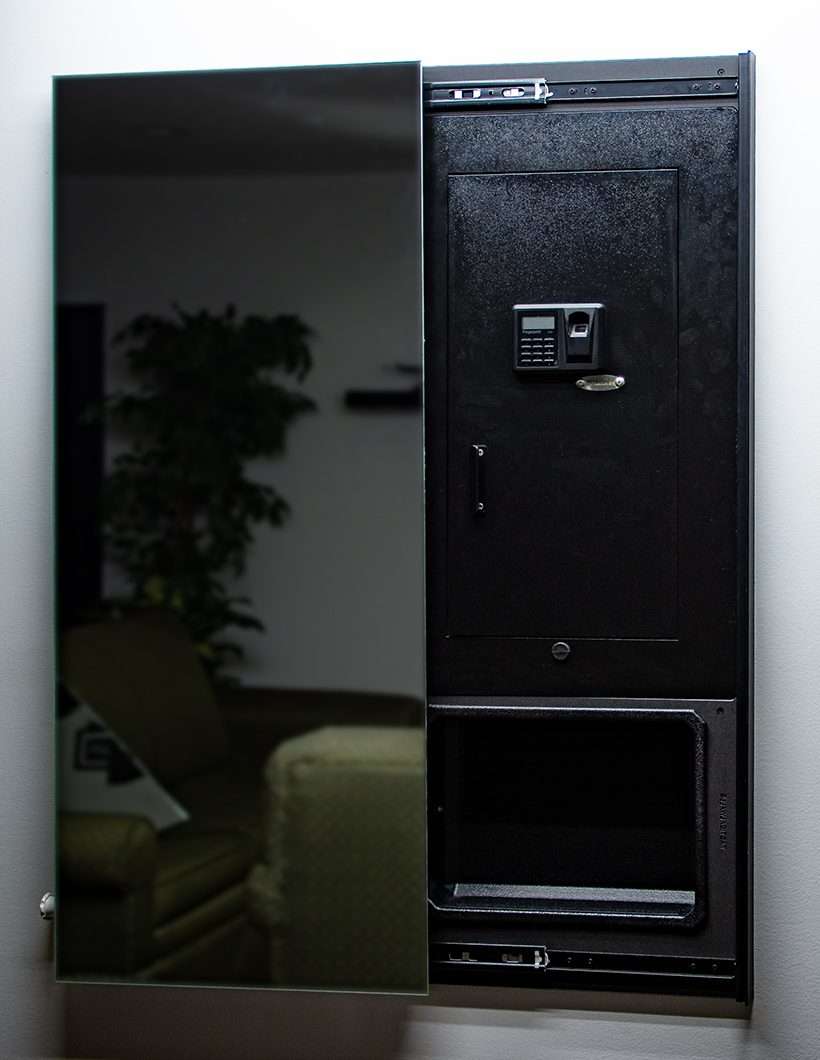
Fireproofing a safe means wrapping it in heavy insulating material, and that adds thickness and weight. Wall safes live between studs, where every inch counts. So across the industry, in-wall safes rarely offer fire protection.
Our lineup (mostly) follows the same pattern:
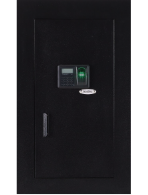
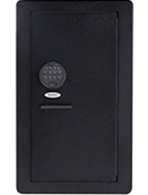
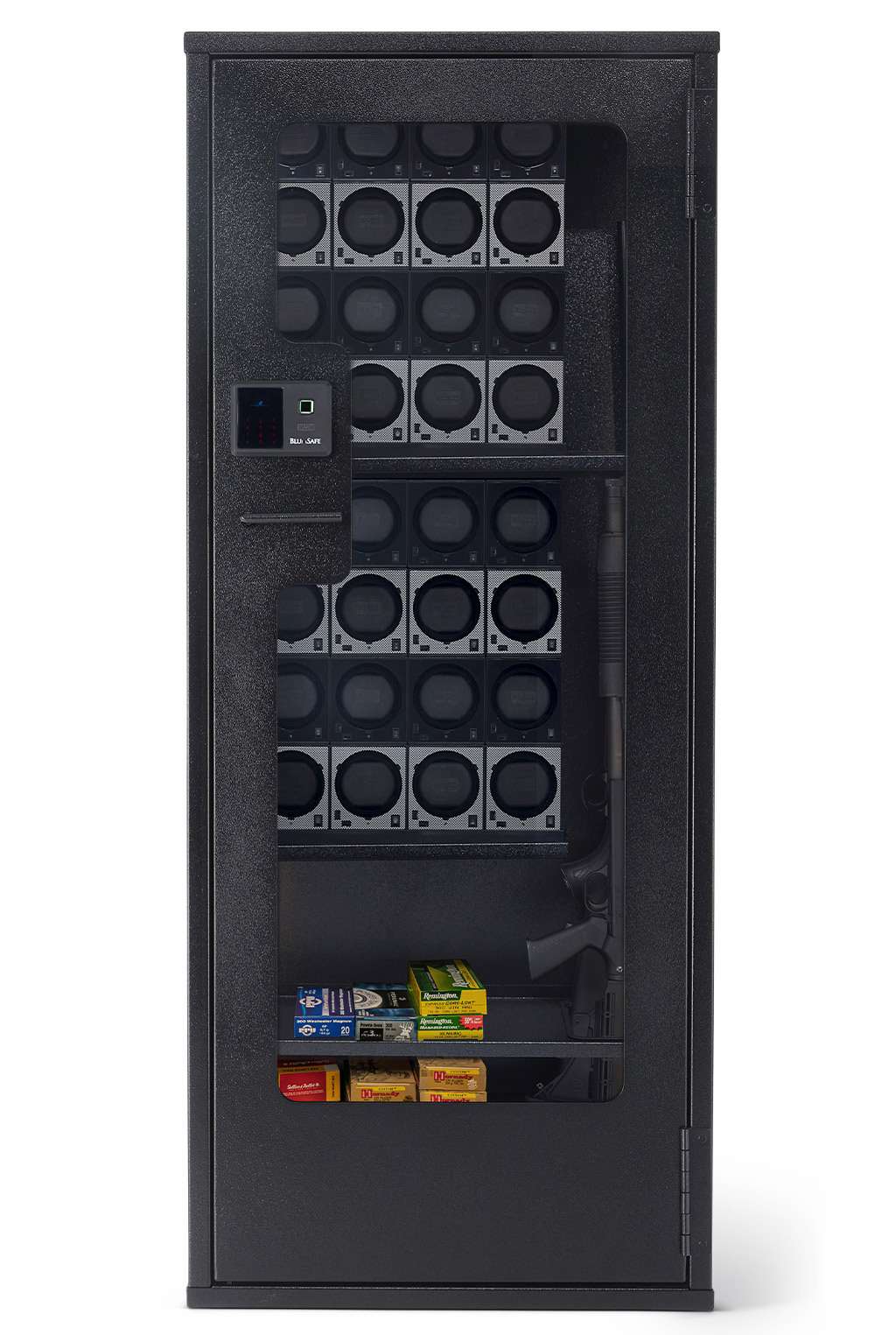
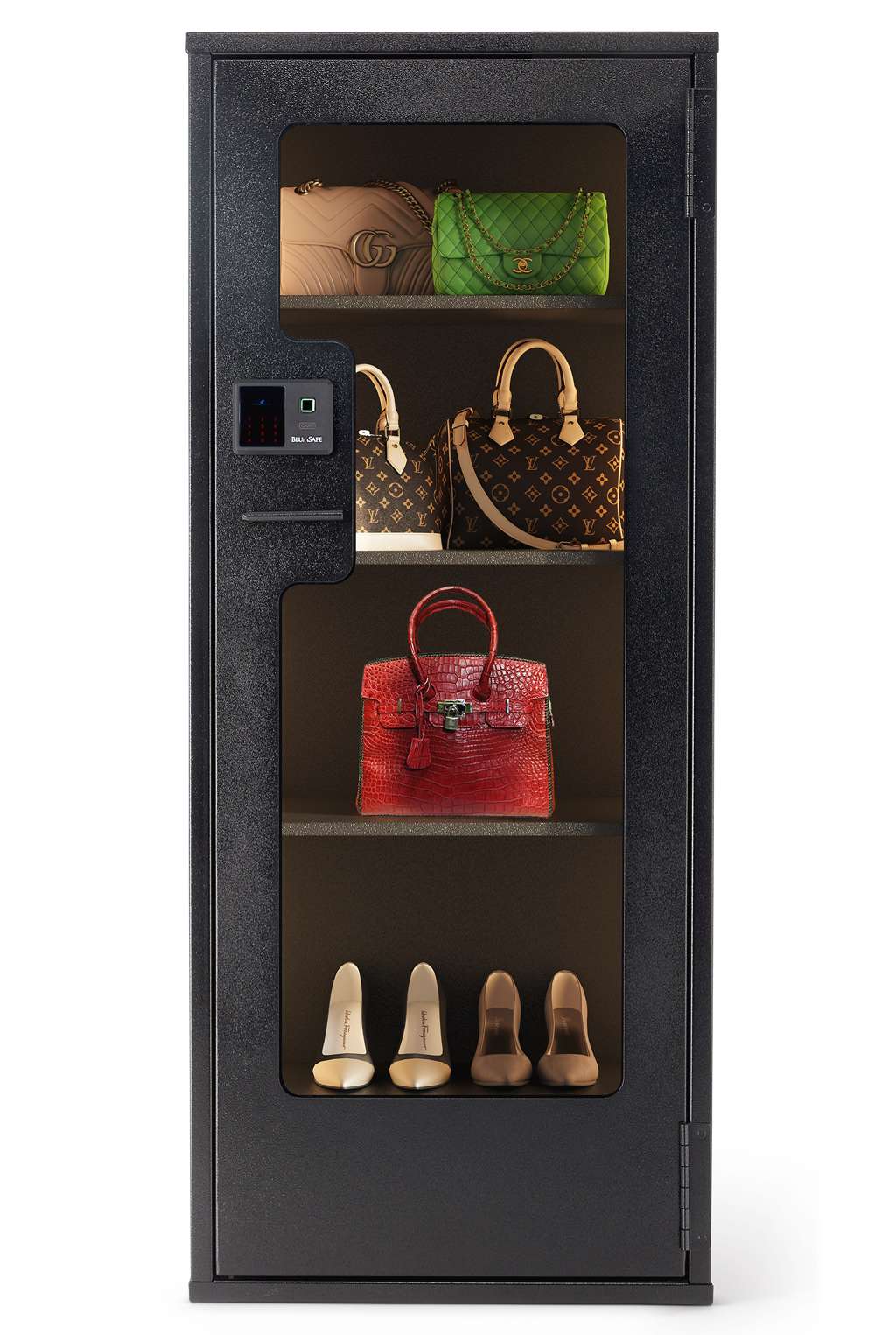
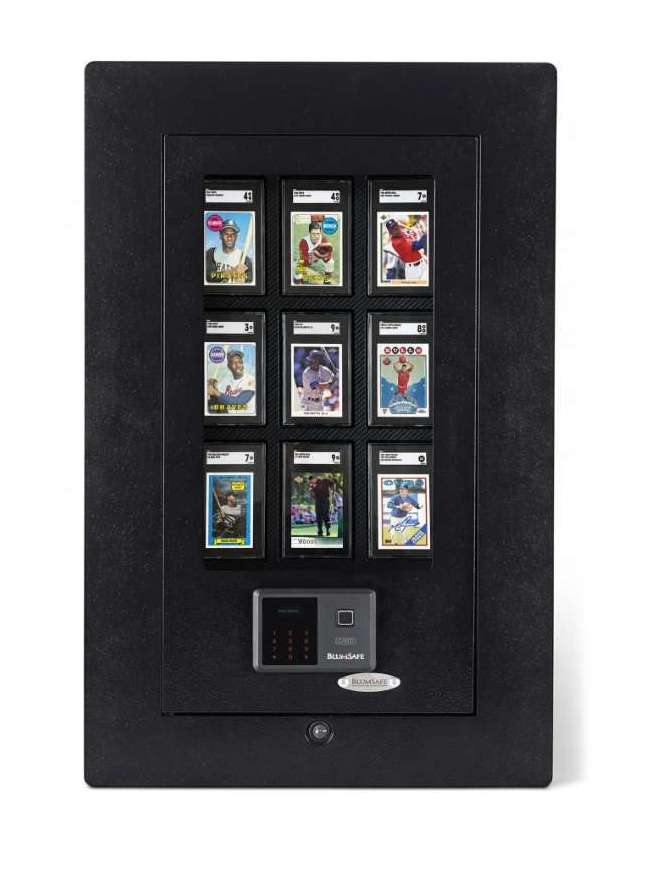
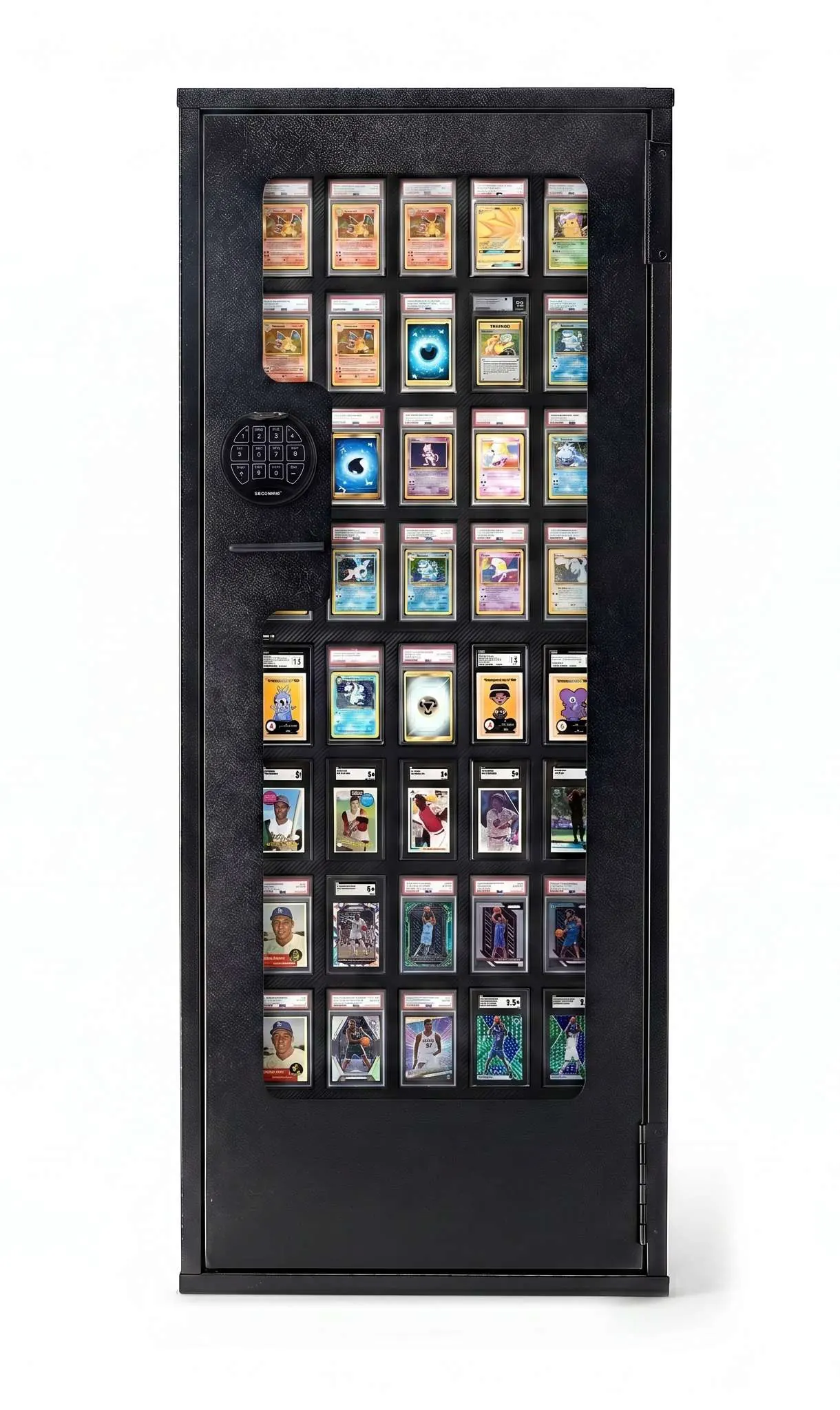
- Steel Door and Display Door BlumSafes, and the BlumSafe Professional Junior: built for security, access and display. They are not fireproof.
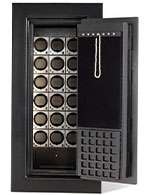
- The BlumSafe Professional: our one fireproof built-in wall safe, and our highest level of security, with Class B burglary protection. Unlike most consumer fire safes, its fireboard sits on the outside of the steel, the way a bank vault is built. That keeps the steam that fireboard releases in a fire away from your watches and other valuables. (We explain why that steam matters in why many fireproof safes can be hard on watches.)
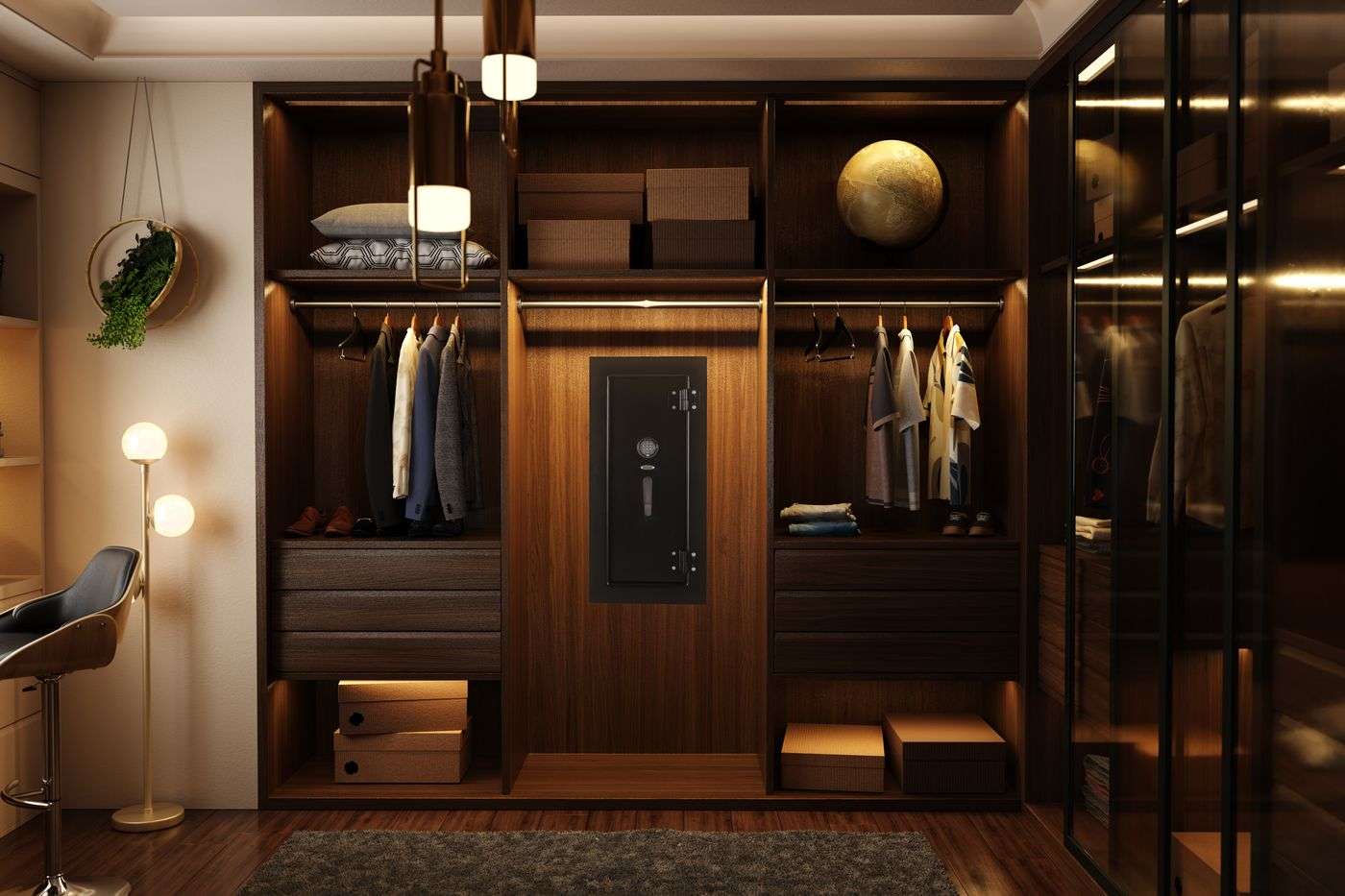
Is there such a thing as a fireproof wall safe?
Yes, but it takes real engineering, which is why so few exist. Here’s how the BlumSafe Professional does it:
- The door is always fireproof. Every Professional ships with a fireproofed door, standard.
- The body is your choice. We can fireproof the body for you as an option. Many builders skip that and instead line the “envelope,” the wall or cabinet enclosure the safe mounts into, with fireboard. That brings the safe down from about 400 pounds to about 250 for installation, and it still gets the full benefit of our fireproofed door.
- Conservatively rated to 50+ minutes. We say conservatively because fire ratings come from furnace tests where the safe stands alone, like a freestanding safe. Installed in your wall or cabinetry, it has extra material around it, which buys additional minutes in a real fire.
If fire protection is your top priority, the Professional is the one built for it. If you already own one of our other models, or love the Display Door’s view of your collection too much to give it up, the rest of this post is for you.
Why not just add a sprinkler?
To be clear, if your home has a whole-house sprinkler system, keep it. Sprinklers save lives, and that matters more than any watch.
But adding a water-based device aimed at your safe is both expensive and a big deal logistically and may be the wrong tool for this specific issue. A watch movement, a leather strap, a stack of graded card slabs or a vintage handbag can be ruined by water long before a fire ever reaches it. And a sprinkler that triggers by accident is its own disaster.
What clean-agent suppression is
Data centers, museums and yacht engine rooms have solved this problem for decades with clean agents. These are fire-suppressing gases that leave no water, no powder and no residue behind.
- How they work: stored as a liquid under pressure, they flash into a gas when released and pull heat out of a fire faster than it can sustain itself.
- The two you’ll see most: FK-5-1-12 (best known as 3M Novec 1230) and HFC-227ea (best known as FM-200). Both are electrically non-conductive and leave no residue.
- How they trigger: small automatic units need no power and no wiring. A heat-sensitive glass bulb or plastic tube ruptures at a set temperature and releases the agent on its own.
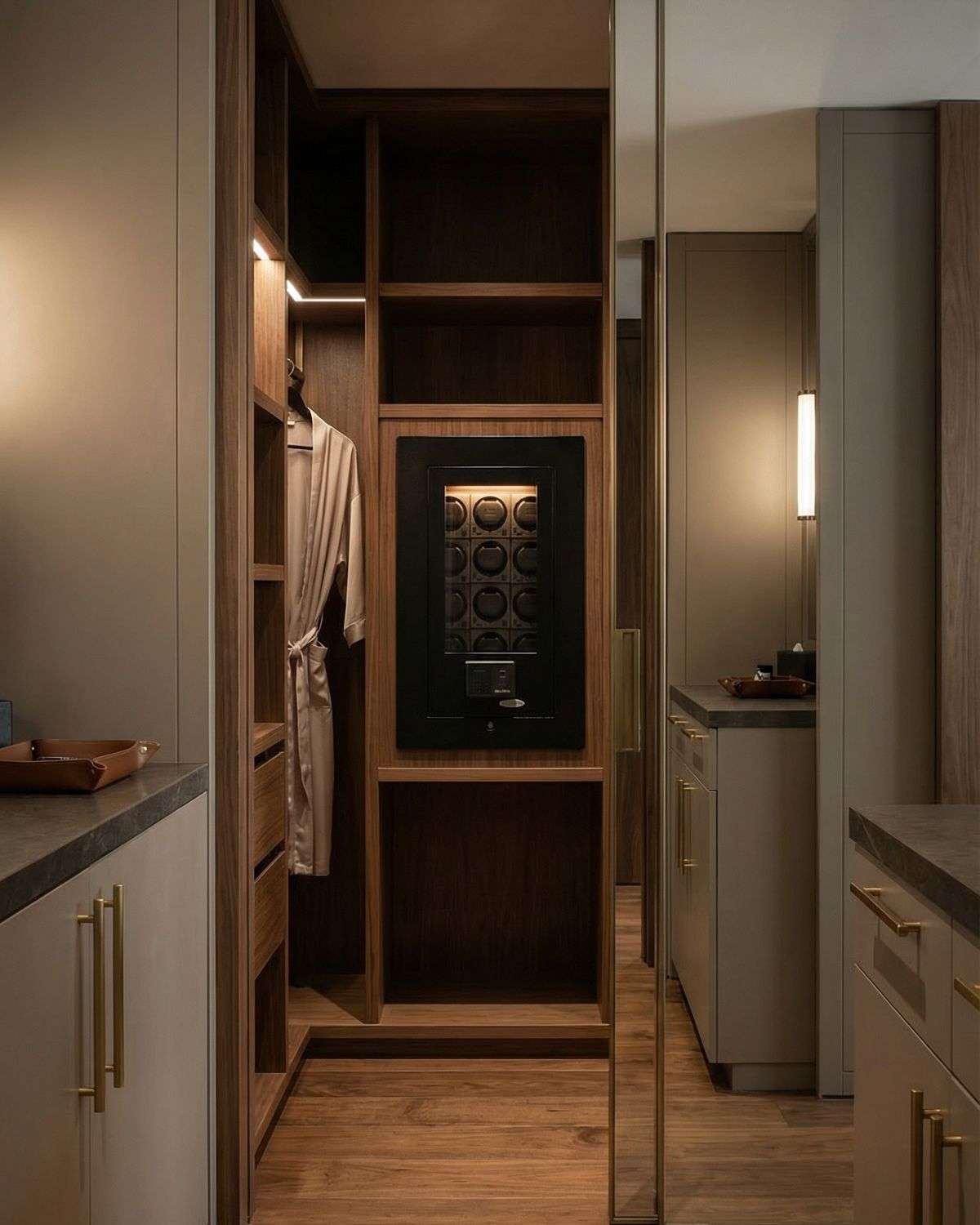
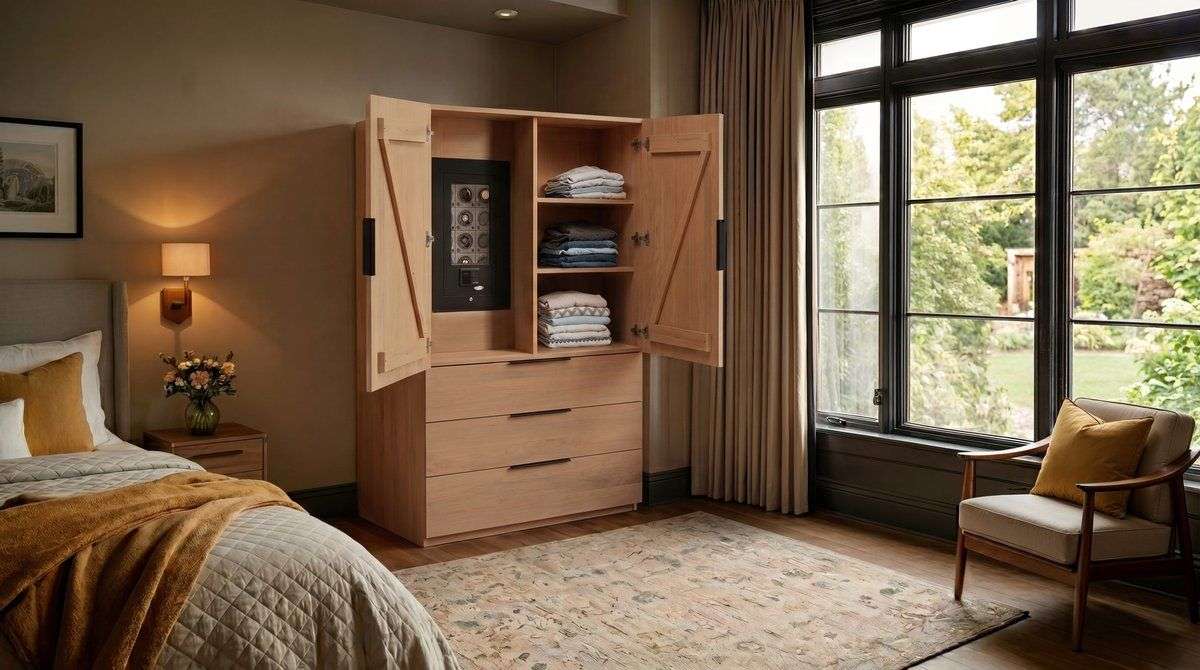
There is one physics lesson worth absorbing: clean agents work by flooding an enclosed space. In an open room, the gas simply drifts away. So a unit like this belongs in a closed, confined space around your safe: a reach-in or walk-in closet with a door that shuts, or built-in cabinetry with closing doors. Keep that door shut when you’re away, and you’ve given the agent a room to work in.
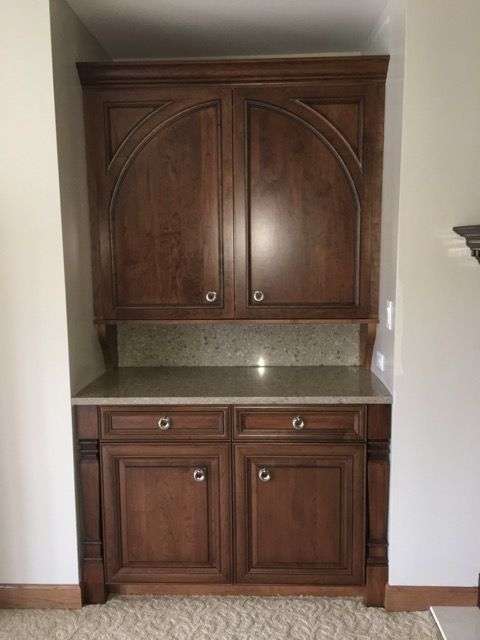
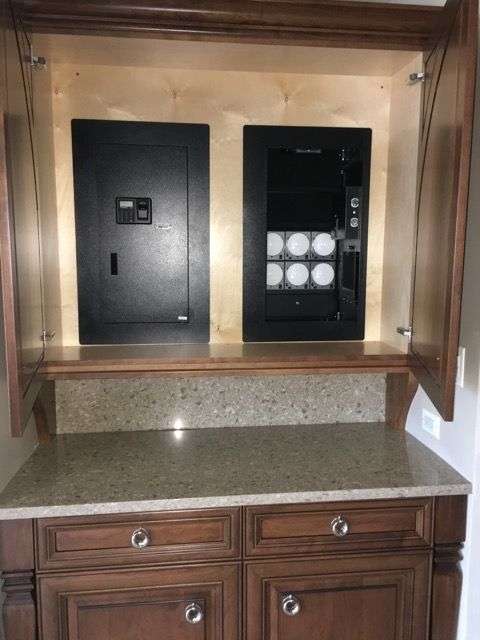
Built-in cabinetry with closing doors hides the safe and gives a clean agent a closed space to work in. A customer installation.
Will it stop a house that is fully engulfed? No. Nothing short of a fire-rated safe coupled with a built-in sprinkler system will. What it can do is knock down fire that reaches your closet early, and buy time for the fire department you’ve already been alerted to call.
US products worth considering
These are the options we’d look at for a closet or cabinet around a BlumSafe, all available in the US.
| Product | Agent | Triggers at | Protects | Residue | Best for |
|---|---|---|---|---|---|
| BlazeCut C Series | Clean agent: FK-5-1-12 or HFC-227ea (order it this way; powder and foam versions also exist) | Automatic, when heat bursts a detection tube | Sized to the space by BlazeCut or your installer | None, with a clean agent | Closets and cabinetry with doors that close |
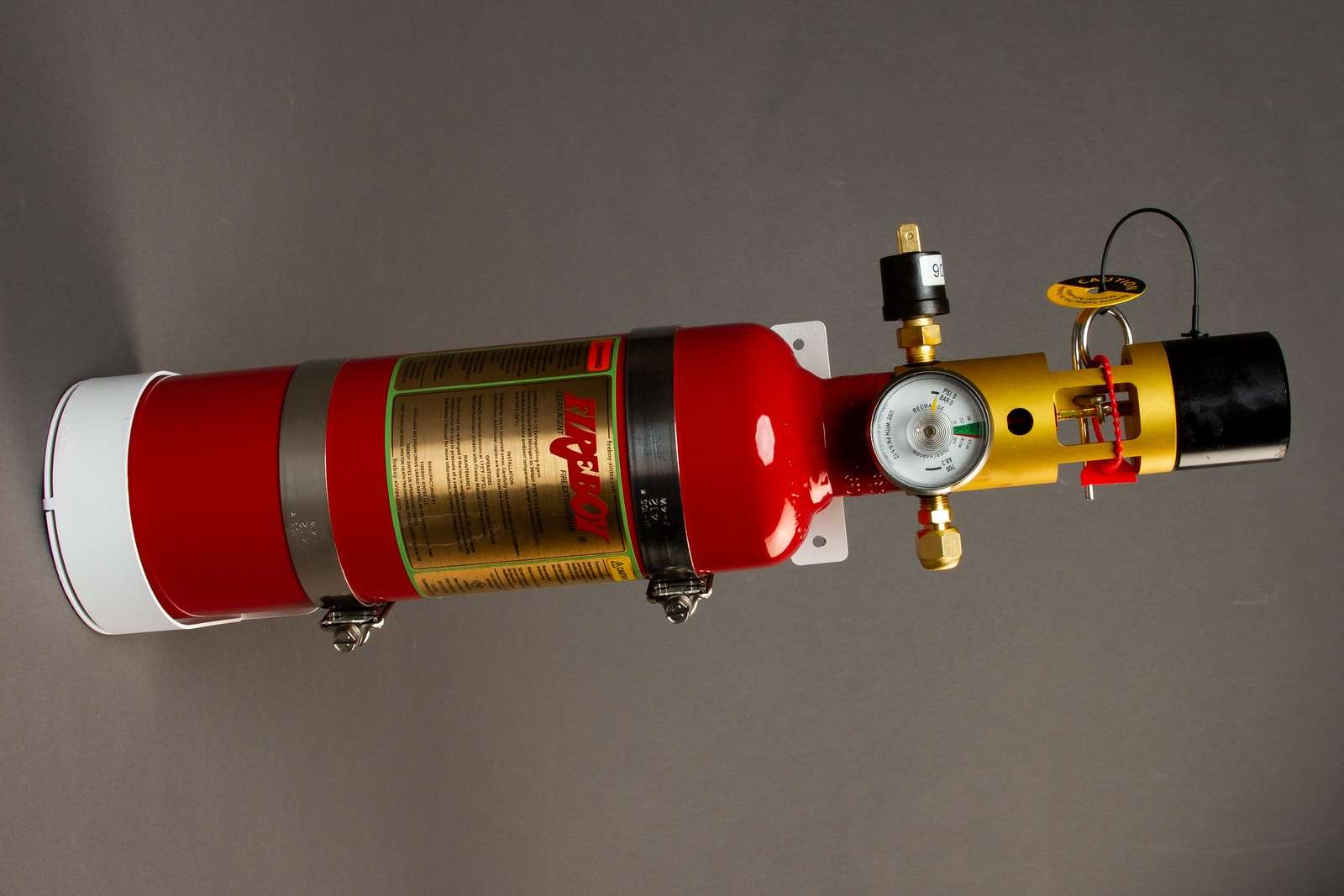
| Fireboy-Xintex CU/MU Series | FK-5-1-12 (clean agent) | Automatic, heat-activated | 25 to 485 cubic feet | None | Walk-in closets and enclosed dressing rooms |
| Stat-X | Potassium-based condensed aerosol | Electronic or thermal actuator | Sized per space | Fine powder | Larger spaces, with professional install |
| Ansul Cleanguard+ | FK-5-1-12 (clean agent) | Manual handheld | Whatever you aim it at | None | The extinguisher you keep by the closet door |
A few notes on each:
- BlazeCut C Series. A small pressurized cylinder connects to a heat-sensitive detection tube that you route along the top of the closet or cabinet. When heat bursts the tube, the cylinder releases its agent, either directly or through small nozzles. It needs no power to work. Order it with a clean agent (FK-5-1-12 or HFC-227ea), not powder or foam. It can also connect to a BlazeCut alarm panel with a relay output, which is handy for the Home Assistant tie-in below. (BlazeCut’s smaller T Series, a single pressurized tube, is designed for compact spaces like electrical cabinets, or cabinetry like the double BlumSafe customer installation pictured above.)
- Fireboy-Xintex. Best known for protecting boat engine rooms, which are, after all, just enclosed spaces full of expensive machinery. The CU/MU units scale up to a walk-in closet. Because they’re designed for marine use, we’d have a fire protection contractor look over the installation.
- Stat-X. Extremely effective by weight and UL listed, but it isn’t a clean agent in the strict sense. It discharges a fine potassium particulate. The maker says cleanup is minimal; independent sources note that powder residue can be corrosive to electronics. For a watch collection, we’d choose a gas first.
- Ansul Cleanguard+. Not automatic, but worth owning. The typical ABC dry-chemical extinguisher in most homes coats everything in a corrosive powder. A clean-agent extinguisher by your closet door does the job without destroying what you were trying to save. The 3.5-pound model is the practical size.
The smart home tie-in: know before the bulb bursts
A suppression unit is your last line of defense. The first line is knowing early. This is where the sensors discussed in Part 1 of this blog series earn a second job, though of course, our homes almost universally have smoke detector units of various qualities already on the job. This guidance below is if you want something right near your BlumSafe.
What to add:
- A temperature sensor in the closet, mounted high, since heat rises. An inexpensive Aqara temperature and humidity sensor on the same hub as your P100 is ideal.
- A connected smoke detector in or near the room. Aqara makes one that joins the same hub.
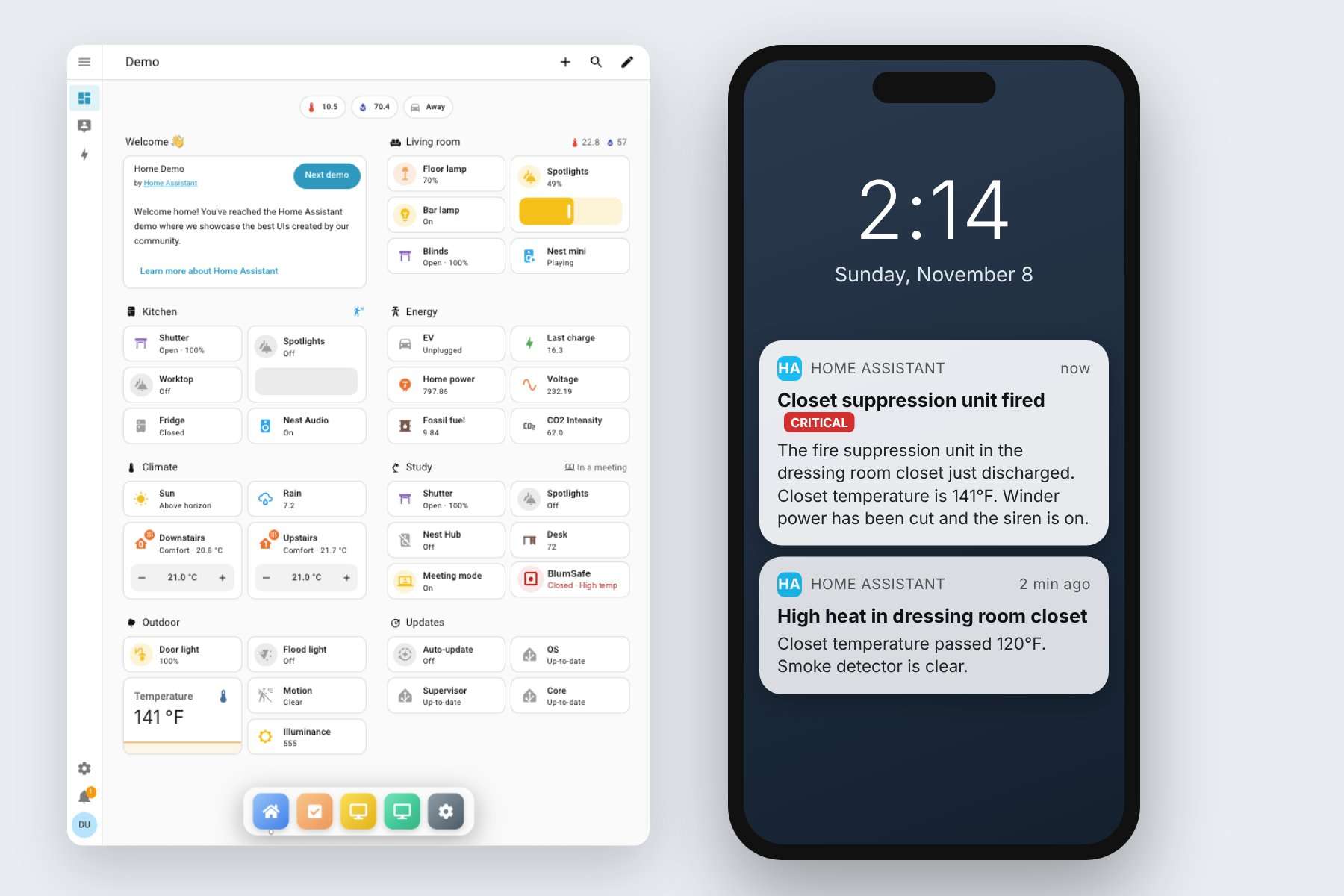
Then set up a heat rule. In Home Assistant (or the Aqara app, for simpler versions), it looks like this:
- Trigger: closet temperature passes a threshold well above normal, say 120°F, or the smoke detector goes off.
- Alert: push a critical notification to every phone in the household, plus a trusted neighbor or house manager.
- Sound it: fire the siren on your Aqara M3 hub or any other connected siren.
- Cut power: switch off the smart plugs feeding your watch winders and cabinet lighting.
- Show it: turn on the lights and start any camera recordings, so you and the fire department can see what you’re dealing with.
The point is simple. A suppression unit only fires once the heat is already serious. Your phone should know something is wrong long before that, while there’s still time to call 911 and get help on the way.
This is also where the trade-off from Part 1 shows up again. The Aqara app can handle steps 1 to 3 out of the box. Home Assistant is what lets you chain all five together, across brands, with the logic you want.
And one more trick: let the extinguisher report back. Some suppression units offer an optional pressure switch, a small contact that changes state the moment the unit discharges or starts losing pressure. Wire it to an inexpensive smart sensor input, and Home Assistant can tell your phone “the closet suppression unit just fired,” or remind you that it has lost pressure and needs service. Ask about this option before you buy, since not every model offers it.
You may wonder whether Home Assistant could work the other way and fire the extinguisher early. With some electrically released systems it is technically possible, but I don’t think I’d go that route. A glitchy sensor or a software hiccup could empty the unit for nothing. It adds wiring and Wi-Fi to a device whose best feature is needing neither. And electrically released systems are meant to be fired through a listed control panel installed to fire code. Let the unit do its job on its own, and let Home Assistant do the talking.
Putting it together
| Your setup | What we’d add (but every situation is different, so consult a pro) |
|---|---|
| BlumSafe in built-in cabinetry or a reach-in closet | BlazeCut C Series with a clean agent, sized to the space, plus a heat sensor and alert |
| BlumSafe in a walk-in closet or dressing room with a door | Fireboy-Xintex CU/MU unit (contractor-reviewed), plus a heat sensor and alert |
| BlumSafe in an open wall, no enclosure | Heat and smoke alerts and a clean-agent extinguisher nearby. Automatic suppression needs a closed space to work |
| Fire protection is the top priority | A fireproofed BlumSafe Professional |
Whichever you choose, a few habits help:
- Keep the closet door closed when you’re away, so the agent has a space to fill.
- Size the unit to the volume, measured in cubic feet, and follow the maker’s guidance.
- Photograph your collection and keep the serial numbers off-site, in the cloud or with your insurer. It makes any claim far easier.
- Keep it properly insured. Suppression and alerts improve your odds; insurance covers the rest.
The bottom line
You bought a BlumSafe because you wanted your collection close, visible and secure. Fire is the one threat a wall safe was never designed to stop. A heat alert on your phone and a small, waterless suppression unit nearby won’t make a wall safe fireproof, but they put the odds back on your side.
And if fire protection is high on your list, talk to us about the BlumSafe Professional, or start with our Help Me Choose page.
Have you added fire suppression around your safe? We’d love to hear what you chose, and to get a photo we can show other collectors. Write to us at support@blumsafe.com.
Frequently asked questions
Are wall safes fireproof?
Most are not. Fireproofing adds thickness and weight that won’t fit between wall studs, so in-wall safes rarely carry fire protection. Of our safes, only the BlumSafe Professional is fireproof. Its door is always fireproofed, and we can also fireproof the body as an option.
Is the BlumSafe Professional fireproof?
Yes. Its door is always fireproofed, and the body can be fireproofed by us as an option or protected on site by lining the wall or cabinet enclosure with fireboard. It is conservatively rated to 50+ minutes, based on testing as a freestanding safe; installed in a wall or cabinet, it has extra protection around it.
Do fireproof safes damage watches?
They can. Many consumer fire safes put their insulation inside the steel, and it releases steam in a fire that can harm watch movements and leather. The BlumSafe Professional keeps its fireboard outside the steel. We cover this in more detail in our post on why many fireproof safes can be hard on watches.
Should I put a sprinkler near my safe?
We wouldn’t. Water can ruin watch movements, leather straps, card slabs and handbags long before a fire reaches them, and an accidental discharge is its own disaster. Keep any whole-house sprinkler system, but don’t add water aimed at your collection.
What is a clean-agent fire suppressor?
A small unit filled with a fire-suppressing gas, such as FK-5-1-12 (Novec 1230) or HFC-227ea (FM-200). When heat bursts a bulb or melts a tube, the gas floods the enclosed space and knocks the fire down, leaving no water or residue.
Will a clean agent damage my watches or cards?
Clean agents like FK-5-1-12 and HFC-227ea are designed to leave no residue and are used to protect electronics and museum collections. Condensed aerosol units are different: they leave a fine powder, so we’d choose a gas first for a watch collection, understanding there are no guarantees.
Can Home Assistant trigger a fire extinguisher early?
With some electrically released systems it is technically possible, but we don’t recommend it. Let the unit fire on its own, and use Home Assistant for early heat alerts and to report when the unit has discharged.
A note on our recommendations
This post reflects our own experience and our best research as of October 2026. Smart home and safety products change constantly: manufacturers update firmware, features, compatibility and pricing, and occasionally discontinue products altogether. Please confirm current specifications with the manufacturer before you buy, follow their installation guidance, and test any setup before you rely on it. BlumSafe is not paid by, and has no affiliation with, any of the companies or products mentioned here. These are simply the products we like.
About the author
Rob Blum is the founder of BlumSafe, the North Carolina company that designs and builds built-in safes, concealment furniture and related accessories, all made in the USA. A lifelong watch collector who has been tinkering with home automation since the 1980s, he started BlumSafe in 2016 and has been writing about protecting collections ever since.